


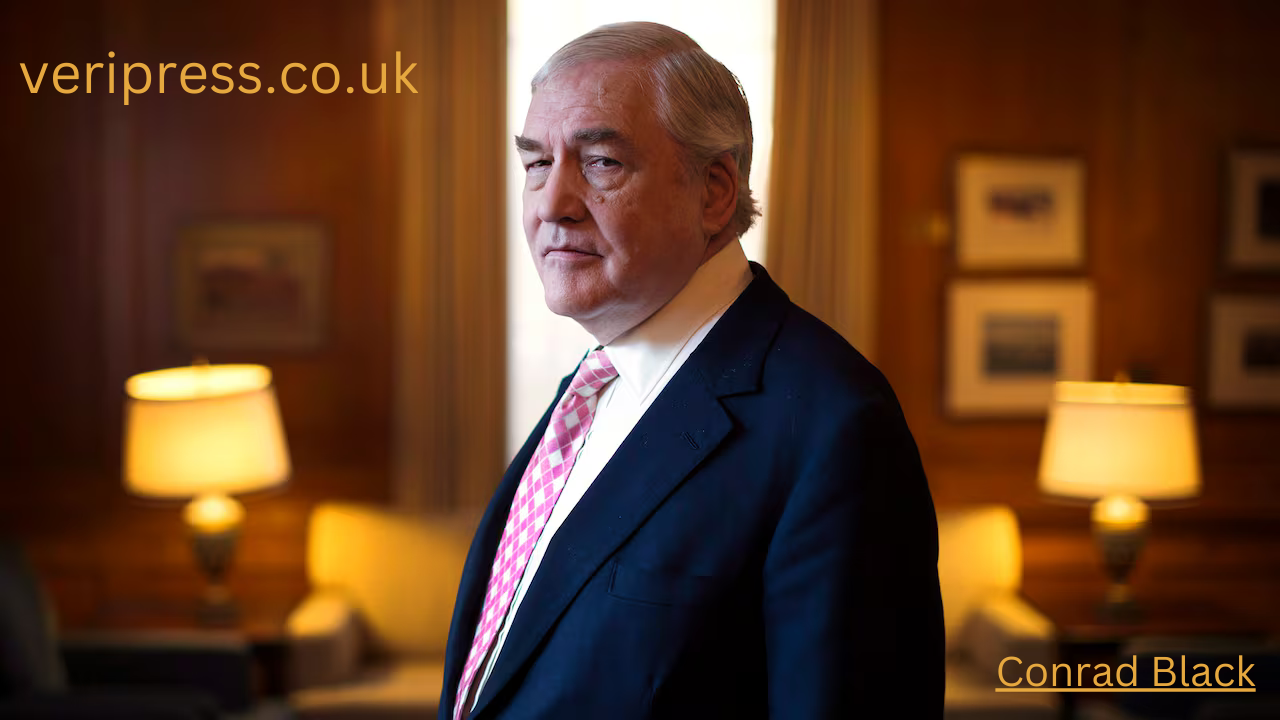
Let’s be honest — some names instantly spark strong opinions. Conrad Black is one of them. Mention him in a room full of journalists, business readers, or political observers, and you’ll probably hear wildly different reactions. Visionary. Aristocrat. Media baron. Convicted executive. Comeback writer.
And the truth is… all of those descriptions fit.
life reads less like a traditional biography and more like a sweeping novel — one filled with ambition, success, downfall, reflection, and reinvention. So today, instead of headlines or hot takes, let’s slow down and look at the whole picture. Because once you do, you’ll see why his story still matters.
Who Is Conrad Black? A Straightforward Introduction
Conrad Black, formally Conrad Moffat Black, is a Canadian-born British historian, writer, and former newspaper publisher. Born on August 25, 1944, he rose to global prominence as the head of one of the largest media empires of the late 20th century.
At his peak, Conrad Black controlled hundreds of newspapers across:
- Canada
- The United States
- The United Kingdom
- Australia
And not just small outlets — we’re talking about influential publications that shaped public opinion for decades.
Early Life: Privilege, Ambition, and Big Expectations
Conrad Black was born into wealth. His father, George Black, was a prominent Canadian businessman, which meant young Conrad grew up surrounded by influence, education, and opportunity.
But what’s interesting is this: wealth alone didn’t define him. From an early age, Black showed a fascination with history, politics, and power. He attended elite schools and later studied at Carleton University and Université Laval, developing the intellectual confidence that would later define his public persona.
And yes — confidence might be putting it lightly.
Building a Media Empire: The Rise of Hollinger
How Conrad Black Changed Newspaper Ownership
Conrad Black’s business legacy is inseparable from Hollinger International, the media company through which he acquired hundreds of newspapers. His strategy was simple but bold:
- Buy underperforming papers
- Cut costs aggressively
- Focus on editorial influence
Publications under his control included:
- The Daily Telegraph (UK)
- Chicago Sun-Times
- National Post (Canada)
At one point, Black was considered one of the most powerful media owners in the Western world.
And honestly, that kind of influence doesn’t come quietly.
Editorial Vision: Admired by Some, Criticized by Others
One thing that made Conrad Black unique was his hands-on editorial involvement. Unlike many publishers, he didn’t just own newspapers — he shaped them.
Supporters admired his:
- Intellectual rigor
- Willingness to challenge consensus
- Support for conservative and classical liberal ideas
Critics, however, argued that:
- He blurred lines between ownership and editorial independence
- His political views influenced coverage
But either way, his presence was impossible to ignore.
The Fall: Legal Troubles and Conviction
And then came the part everyone remembers.
In the early 2000s, Conrad Black faced serious legal scrutiny related to financial dealings at Hollinger. In 2007, he was convicted in the United States on charges including fraud and obstruction of justice.
He was sentenced to prison and served time.
Now, regardless of where you stand, this moment changed everything.
For a man who once moved presidents and prime ministers with editorials, the fall was dramatic and deeply human.
Prison, Reflection, and Reinvention
Here’s where Conrad Black’s story takes a turn that many people don’t expect.
Instead of disappearing after prison, he wrote.
While incarcerated, Black authored:
- Essays
- Historical reflections
- Memoirs
And to be honest, this period reshaped his public image more than anything else. He emerged not as a silent exile, but as a reflective intellectual willing to analyze his own failures — at least partially.
In 2019, he received a presidential pardon, reigniting debate about justice, power, and redemption.
Conrad Black the Author: A Different Kind of Legacy
Long before — and long after — his media empire, Conrad Black was a prolific writer and historian.
Notable Books by Conrad Black
- Franklin Delano Roosevelt: Champion of Freedom
- Richard Nixon: A Life in Full
- A Matter of Principle (memoir)
These works show another side of him — deeply analytical, historically grounded, and unapologetically opinionated.
Even critics often admit:
Conrad Black can write.
Public Opinion: Why Conrad Black Still Divides Audiences
What’s fascinating is that decades later, Conrad Black remains relevant. Why?
Because his life raises uncomfortable but important questions:
- Can brilliance coexist with arrogance?
- Should success excuse ethical lapses?
- Is redemption possible after public disgrace?
Some view him as a cautionary tale. Others see him as proof that intellectual contribution doesn’t vanish with failure.
And maybe just maybe both views can be true.
Conrad Black Today: Where Is He Now?
In recent years, Conrad Black has:
- Continued writing columns and essays
- Appeared in interviews and documentaries
- Maintained a public intellectual presence
He no longer controls newspapers, but he still influences debates — especially on history, politics, and Western institutions.
And that’s no small thing.
What We Can Learn from Conrad Black’s Life
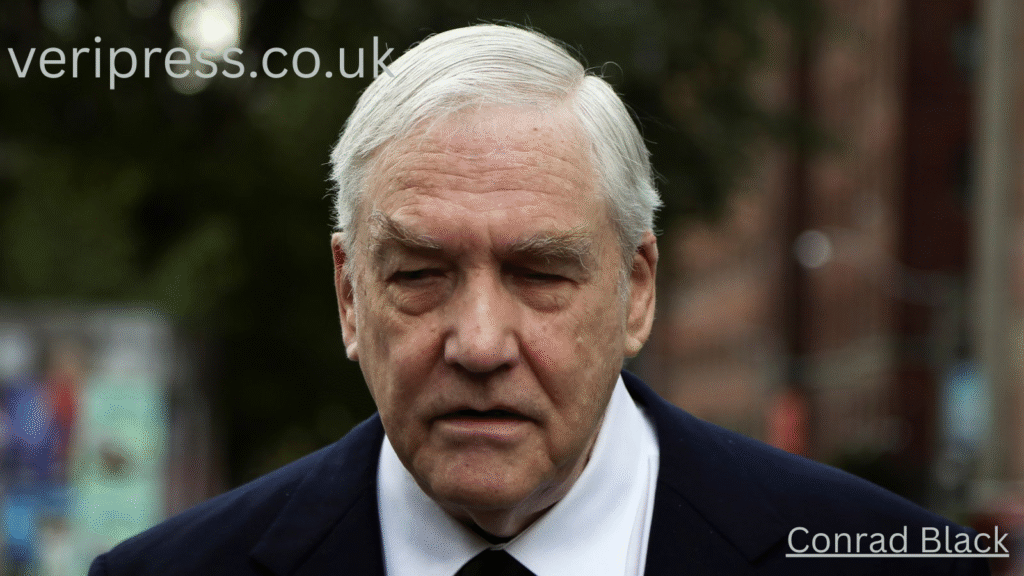
If you strip away the drama, the legal battles, and the headlines, Conrad Black story offers real lessons:
- Power amplifies mistakes
- Intelligence doesn’t guarantee wisdom
- Reinvention is possible, but reputation lingers
We’ve all seen people rise too fast or fall too hard. His life just happened to unfold on a global stage.
Conclusion: A Legacy Too Complex for Simple Labels
So how should we remember Conrad Black?
As a media baron? Yes.
As a controversial figure? Absolutely.
As a historian and writer? Undeniably.
His life reminds us that history rarely gives us clean heroes or simple villains. More often, it gives us complicated humans — ambitious, flawed, resilient, and reflective.
And that’s why Conrad Black still matters.
