


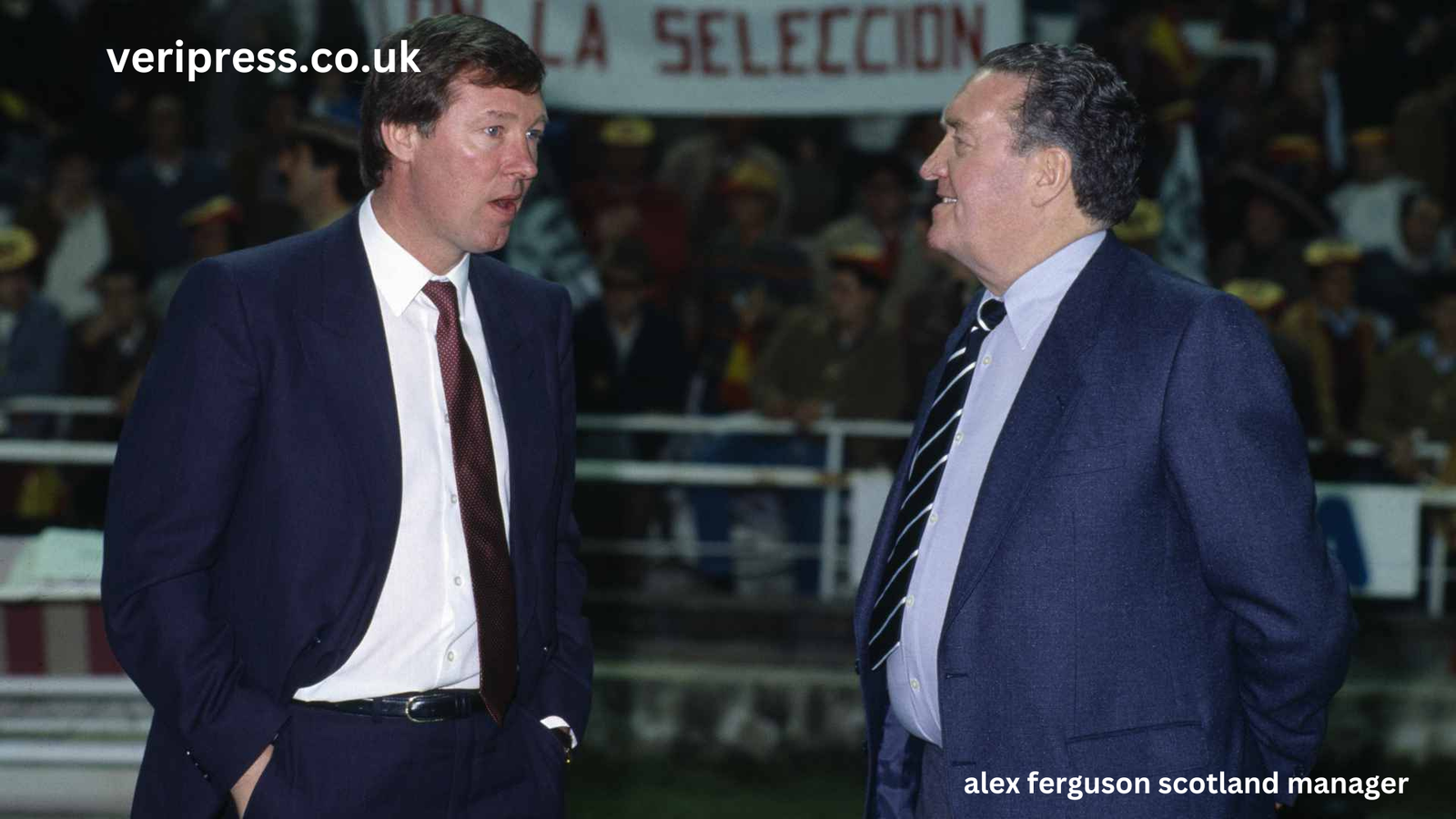
The phrase alex ferguson scotland manager often sparks curiosity among football fans worldwide. While Sir Alex Ferguson is universally celebrated for his historic achievements at Manchester United, fewer people fully understand his connection with the Scotland national team. His involvement at the international level was brief but deeply significant, coming at a crucial moment in Scottish football history.
To appreciate the true meaning behind alex ferguson scotland manager, it is essential to explore his early life in Scotland, his groundbreaking work at Aberdeen, the circumstances that led to his appointment as national team manager, and how this chapter influenced both his career and Scottish football as a whole. This article provides a detailed, balanced examination of that story while keeping the focus on the broader historical and sporting context.
Early Life and Scottish Identity Behind Alex Ferguson Scotland Manager
Sir Alex Ferguson was born on December 31, 1941, in Govan, Glasgow, Scotland. Growing up in a working-class environment, he developed the strong discipline, resilience, and competitive nature that later defined his managerial career.
Before stepping into management, Ferguson enjoyed a solid playing career as a striker. He represented clubs including Queen’s Park, St. Johnstone, Dunfermline Athletic, Rangers, Falkirk, and Ayr United. His time as a player gave him first-hand experience of Scottish football’s intensity and culture.
The foundation of alex ferguson scotland manager lies in these formative years. His deep connection to Scottish football was not simply professional—it was personal. The values he learned in Glasgow shaped his management philosophy, emphasizing mental strength, tactical discipline, and relentless ambition.
The Rise of a Manager in Scotland
Long before his name became synonymous with global football success, Ferguson built his reputation within Scotland’s domestic leagues. His managerial journey began in 1974 with East Stirlingshire. Though the club was modest in stature, Ferguson’s leadership qualities were immediately evident.
He soon moved to St. Mirren, where he achieved significant success by guiding the club to the Scottish First Division title in 1977. His ability to rebuild teams and demand excellence made him stand out.
However, it was his appointment at Aberdeen in 1978 that truly transformed Scottish football and set the stage for future discussions around alex ferguson scotland manager.
Aberdeen Success and National Recognition
At Aberdeen, Ferguson accomplished something extraordinary. During a period dominated by Celtic and Rangers, he broke the Old Firm’s control over Scottish football.
Under his leadership, Aberdeen won multiple league titles and domestic cups. The pinnacle of his Scottish club career came in 1983 when Aberdeen defeated Real Madrid to win the European Cup Winners’ Cup. This remarkable victory elevated Ferguson to international prominence.
His achievements at Aberdeen demonstrated that Scottish clubs could compete on the European stage. Naturally, when leadership changes occurred within the national setup, Ferguson’s name was among the top candidates. The growing association with alex ferguson scotland manager began during this era of national recognition.
The Tragic Circumstances Leading to Alex Ferguson Scotland Manager
The story of alex ferguson scotland manager is closely linked to a moment of tragedy in Scottish football. In 1985, Scotland’s national team manager, Jock Stein, passed away suddenly after a World Cup qualifying match against Wales.
Stein was a towering figure in Scottish football, and his death left the national team in shock. The Scottish Football Association needed a strong leader who could steady the team during an emotionally difficult time.
Ferguson, then at the height of his success with Aberdeen, was appointed as caretaker manager. His immediate task was to guide Scotland through a crucial World Cup playoff against Australia.
World Cup Qualification: A Test of Leadership
One of the most defining aspects of alex ferguson scotland manager was his role in securing Scotland’s qualification for the 1986 FIFA World Cup.
The playoff against Australia was tense and highly competitive. Ferguson managed to lead Scotland through the tie, ensuring their place in the tournament in Mexico.
This achievement showcased his calmness under pressure and his ability to unite players during challenging circumstances. Although his appointment was initially temporary, he was later given responsibility for managing Scotland at the World Cup finals.
The 1986 FIFA World Cup Campaign
Managing a national team presents different challenges compared to club football. Preparation time is limited, and tournaments demand quick tactical adjustments.
At the 1986 FIFA World Cup, Scotland faced strong opponents including Denmark, West Germany, and Uruguay. Despite determined performances, Scotland struggled to progress beyond the group stage.
Although the campaign ended in disappointment, Ferguson’s leadership during this period was widely respected. The team competed with dignity, and his handling of the transition after Stein’s death was seen as professional and composed.
This chapter remains a key element in understanding alex ferguson scotland manager, even though it was relatively short-lived.
Why His Time as Scotland Manager Was Brief
After the World Cup, Ferguson returned his focus to club football. Later in 1986, he accepted the managerial position at Manchester United.
The decision marked the beginning of an era that would redefine English football. At Manchester United, Ferguson went on to win 13 Premier League titles, five FA Cups, four League Cups, two UEFA Champions League trophies, and numerous other honors.
Had he remained with Scotland, the national team’s trajectory might have been different. However, his move to England allowed him to develop one of the most dominant club dynasties in football history.
Even though his national team tenure was short, the phrase alex ferguson scotland manager continues to intrigue fans because of what might have been.
Comparing Club and International Management
The topic of alex ferguson scotland manager often leads to comparisons between his club success and his brief international experience.
At club level, Ferguson excelled because he could build long-term systems, nurture young talent, and reshape squads over time. International management, by contrast, limits such control.
The Scotland job required immediate results without the luxury of prolonged development. Despite these limitations, he still managed to guide the team to a World Cup.
This contrast highlights how adaptable Ferguson was as a coach. While he thrived most in club environments, he proved capable on the international stage as well.
Influence on Scottish Football After His Tenure
Even after leaving the national team role, Ferguson remained one of Scotland’s most influential football figures. His success abroad inspired a generation of Scottish managers and players.
Many within Scottish football circles believe that his managerial standards elevated expectations nationwide. His emphasis on discipline, youth development, and mental toughness became models for aspiring coaches.
The legacy of alex ferguson scotland manager therefore extends beyond tournament results. It symbolizes a period when Scottish leadership commanded respect on the global stage.
Public Perception and National Pride
In Scotland, Ferguson is regarded as a national icon. His achievements at Aberdeen are cherished, and his contributions to the national team are remembered with respect.
The phrase alex ferguson scotland manager often appears in discussions driven by national pride. Scottish supporters frequently reflect on the possibility of what long-term leadership from Ferguson might have achieved.
His global recognition has also brought positive attention to Scottish football heritage.
The Legacy of Alex Ferguson Scotland Manager
Although his role with the national team was limited in duration, its impact remains meaningful. He stepped into leadership during a period of uncertainty and delivered stability.
More importantly, his overall career demonstrated the potential of Scottish coaching talent on the world stage.
When analyzing alex ferguson scotland manager, it becomes clear that the significance lies not only in the World Cup campaign but also in the broader narrative of Scottish football excellence.
Lessons from His Time with Scotland
Several lessons can be drawn from this chapter:
- Leadership during crisis is as important as long-term planning.
- Adaptability defines elite managers.
- National identity can influence managerial philosophy.
- Even brief tenures can leave lasting impressions.
These insights reinforce why the discussion around alex ferguson scotland manager continues decades later.
Conclusion
The story of alex ferguson scotland manager represents a unique and often overlooked chapter in football history. While Sir Alex Ferguson’s legendary status largely stems from his achievements at Manchester United, his contribution to Scotland’s national team during a time of emotional difficulty should not be underestimated.
He guided Scotland to the 1986 World Cup under challenging circumstances and provided stability following a national tragedy. Although his international managerial career was brief, it showcased his leadership qualities and commitment to Scottish football.
Ultimately, the phrase symbolizes more than a job title. It reflects a moment when one of football’s greatest managers stepped forward for his country. Even today, discussions about his time in charge continue to spark admiration and curiosity.
Through his early Scottish triumphs, his caretaker national role, and his subsequent global dominance, Sir Alex Ferguson remains one of the most influential figures in football history. The chapter associated with alex ferguson scotland manager may have been short, but it remains an important part of his remarkable legacy.
